


PEC hoarding response team highlights severity and dangers
Administrator | Apr 26, 2026 | Comments 0
By Sharon Harrison
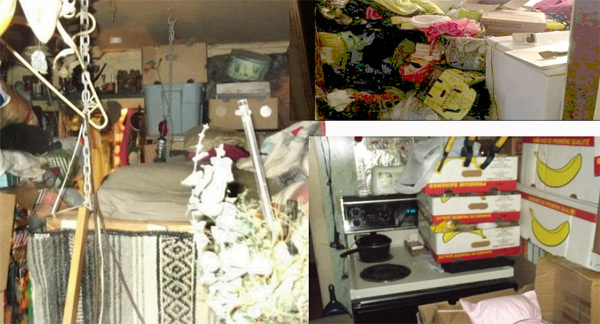
What hoarding is and who it affects, the dangers it can present, the types and levels , myths and much more were outlined by Mike Branscombe, fire prevention officer with Prince Edward County Fire and Rescue and Elis Ziegler, affordable housing supervisor with Prince Edward County Affordable Housing Corporation.
In the presentation to council at Thursday’s committee of the whole meeting, they provided an overview on the Hoarding Action Response Team Prince Edward County (HART PEC), outlining who they are and what they do, as well as explaining what hoarding actually is, and its prevalence in the County.
Led by the municipality, the Prince Edward Hoarding Coalition is a collaborative service co-ordination coalition maximizing resources to effectively support residents who hoard. HART was formally established in 2023, and with its partners brings unique knowledge and skills, enhancing the ability for HART members to ensure residents who hoard can safely maintain their homes.
The prevalence of hoarding may shock some people, where it is estimated that two to six per cent of the North American population have hoarding-related issues. Current research suggests that more people who hoard are over the age of 65, and with one-third of the County’s population being seniors, hoarding poses a major concern, they explained.
“Statistically, at minimum, 340 County households could be experiencing severe hoarding which could result in homelessness,” outlined Ziegler. “Hoarding itself causes risk to residents, mental health or otherwise, but also potentially their neighbours. It puts a strain on emergency response and community partner efforts.”
HART currently supports only four per cent of the estimated need.
Ziegler explained that hoarding is often connected to trauma and isolation and is a mental health disorder, and is defined as the persistent collection or excessive acquisition of items, useful or otherwise, and the distress associated with discarding them, not explained by any other mental health disorder.
“You have a lot of stuff, maybe it’s useful, maybe it isn’t, but most importantly, the second part in terms of trying to deal with getting rid of it causes a fair amount of stress to people who hoard.
“As residents age, with the potential for cognitive disease, seniors are a growing group of people who hoard. Physical limitations, due to health and mobility, makes hoarding response more challenging as seniors age in place.”
The roughly 340 households in the County who hoard mirror national demographics, and largely involve single seniors and people with disabilities.
However, hoarding happens regardless of income levels and education and presents many challenges, such as fire risk – beyond just the person’s housing. Hoarding isn’t about one household as there is also strain on family members, direct neighbours and the community at large (and community partners) trying to support the situation.
It is also expensive to remediate, with 2024 figures indicating the cost at a minimum of $5,000 per household to remediate each crisis.
“Unfortunately, there is a lot of shame involved for the person that is hoarding and also for the family, so there is a lot of effort, emotional and otherwise tied into the situation,” said Ziegler.
“If you look at who hoards, we have been keeping track of demographic and service statistics at HART for three years and single people, seniors and people with disabilities feature prominently, as do couples,” Ziegler explained.
Led by Branscombe, along with Ziegler, HART members include Laura McGugan (Community Care for Seniors), Laura Holmes (Salvation Army) and Patti Stacey (municipality).
“The transition from looking at it as a problem to looking at it as a need for compassionate level of support is a beautiful evolution,” shared councillor Kate MacNaughton, who asked about disconnection prevention, and when it comes to hoarding, how much is preventable.
MacNaughton said she thinks there is a bit of a cycle that happens… there is a mental health crisis in an individuals or a couple’s life, but I wonder how many people have been initially impacted, she asked. “You’ve got disability as a factor: how many people at one point lose their capacity? For people with disabilities in particular, that there is a cycle where they are never going to have enough support to not end up in a situation like this again.”
Ziegler said it comes down to trauma.
“If trauma causes a disability, and then you are compounding both the disability and the original trauma, but it’s trauma to the point of, you literally can’t see the forest for the trees and you don’t have the capacity to undo. Trauma is right up there, and it’s particularly compounded for seniors as a lot are isolated for a number of reasons.”
Hoarding goes beyond just accumulating clutter and includes things like collecting items no longer needed (papers and recycling, for example) where volumes become too large impacting the ability to sleep, eat and maintain personal hygiene.
“In a lot of cases, I have seen that,” said Branscombe, who added there are different classifications of hoarding. He also shared he has had to remove people from their homes due to hoarding in order to keep them safe, including families and children.
Squalor syndrome includes the compulsive hoarding of refuse (such as food waste and containers), and involves extreme self-neglect of environment, health and hygiene.
“There is a complete lack of insight in the amount, ability to discard or effect on the person’s life, he explained, describing squalor hoarding as “not nice garbage”.
Animal hoarding can be another element of hoarding where large numbers of animals often don’t get the care they need as the person often sees themselves as a “rescuer”. In these cases, a home’s interior can be affected by waste to the extent that the structural integrity of the home is at risk.
“I’ve seen that in my career three times,” shared Branscombe, who spoke to one home he attended in 2009 with more than 250 animals, his first experience with animal hoarding. “Some were dead and in freezers, some were roaming the house with two-and-a-half feet of feces throughout. It’s not a fun job”.
Branscombe provide one example of a case where the fire department was notified of a senior resident who was living in their rural home without heat, running water, electricity or sanitation, and was using the Prince Edward Fitness and Aquatic Centre to shower.
He said the remediation included large amounts of waste removal, with HART members taking out 50 yards of garbage, and they also helped the woman apply for funds from the Prince Edward Lennox and Addington Social Services to get her vital services running and repairs done involving several local trades who donated services.
“The resident, a professional individual, is now living safely in her home and is quite happy, and is seeking on-going support to continue to reduce the number of items in their home,” he said. “She now has running water, heat, cooking facilities, new electrical panel, showers, and a washroom (she had no washroom and was going to a park to use in the summertime).”
He said that file was just closed, but was a three-year file with invested time by HART members and others.
As far as support goes for HART, Branscombe said, “We work off the corner of our desks providing these services, and have no funding, to protect these people and help them”. He said remediation and other costs have been donated from HART members, as well as waste disposal and other businesses which they reach out to.
It was explained that the process usually starts with a referral or a complaint from a family member, neighbour or community partner, then a follow-up by the fire department and often accompanied by a community partner.

The level of hoarding is then determined to establish if there is an imminent threat to life. Remediation services are secured, removal of animals may be necessary, as may overnight accommodation. A long-term plan is then determined, with continued visits as resources allow to support the resident and reduce increase in hoarding.
As for the future of HART and what services they can continue to offer, Ziegler said what they really need in the long-term is a full-time case manager dedicated to co-ordinating and providing services. They said they are keeping an eye on provincial funding to fill that role.
Filed Under: Featured Articles • Local News