


Would you be ready in an emergency, outage or disaster?
Administrator | May 05, 2026 | Comments 0
By Sharon Harrison
It’s often human nature to be reactive to a situation rather than pro-active, especially if that situation has an emergency or disaster element as a result of extreme weather, food shortages or a prolonged power outage, for examples.
Such emergencies can happen at any time, often with little or no warning. And they can be anything that prevents people from going about their usual day with unexpected disruptions: maybe the roads are closed, maybe the power is out, water too, or maybe communications are comprised.
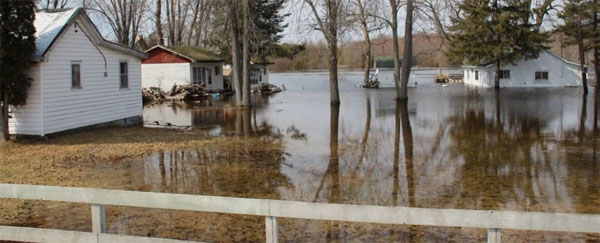
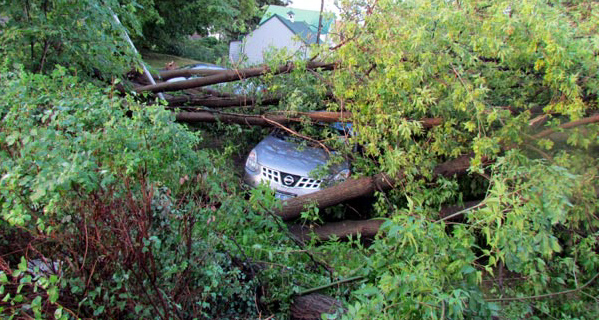
Prince Edward County is not immune to emergency situations having experienced spring flooding, severe snowstorms (shutting down the entire County for several days), extreme heat events, power outages (sometimes prolonged), ice storms, brush fires (even wildfire smoke drifting in from afar), and, of course, the effects locally of the COVID-19 pandemic (with supply chain disruptions and food shortages, etc.), among them.
All that and more was highlighted at an emergency preparedness event Sunday afternoon held at the Prince Edward Community Centre in Picton, where the aim was to help residents be ready before they occur – even if that preparedness only comes in the form of awareness and education.
But readiness and why it matters was the key message, with Sunday’s event also covering what the impacts on such disruptions have, knowing the risks that may exist, where practical simple tips were shared – and most importantly, how to stay safe and secure should disaster (however minor or severe) strike.
“Disruptions are no longer rare; they’re becoming more frequent, complex and disruptive to our daily lives,” said Dominique Jones, executive director of the County Foundation, who was moderator for the event. “Extreme weather, power outages, supply chain interruptions, disinformation and disruptions to civil society are on the rise.”
The risks are changing, she said, and along with more extreme weather, there is a strain on aging infrastructure, the potential for wide-spread infectious disease outbreaks, and broader global tensions that can affect supply chains and costs.
“We have also become more dependent on digital systems, communications and services, which means outages or cyber issues can clearly impact your daily life. These aren’t always things that we are thinking about, but they are why preparedness matters, and everyone has a role to play.”
ReadyPEC is a community-led initiative focused on strengthening local readiness and mitigating the impact of crises, while helping reduce pressure on municipal emergency services. The question being posed by ReadyPEC to residents: Would you be ready in the event of an emergency, outage or disaster?
 The free, and well-attended, event featured an expert panel discussion with deputy fire chief Tim Kraemer representing the fire department, Carson Arthur, landscape designer and television personality talking about food sufficiency, with a health care element by emergency family physician Dr. Margaret Trompe, as well as Craig Mills, general manager with 99.3 County FM who spoke to emergency communications.
Each panelist was asked several questions specific to their field of experience, focusing on what residents can do, what they should be paying attention to, and what tends to make the biggest difference when things don’t go as expected.
Arthur was asked a two-part question to start: If a household only does a few simple things to be better prepared, what should they start with, and, what’s a realistic approach to food readiness that doesn’t feel overwhelming or extreme?
Growing food ourselves in anticipation for need down the road was promoted by Arthur, “grow food for each other, grow food for the community, take care of ourselves, put food away for those, not so much rainy days, but for the lack of days, especially in January, February and March”.
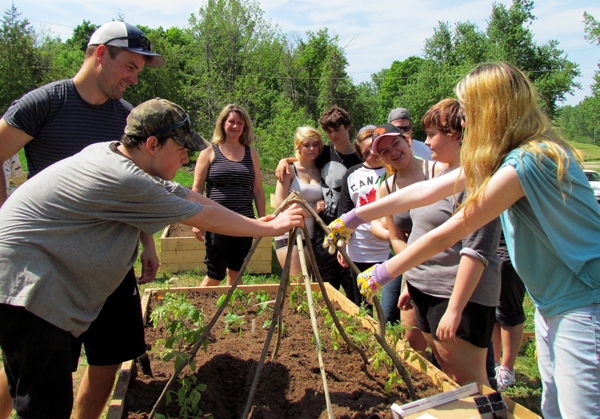
“Its so important for community members to start thinking about what we are using our gardens for, and maybe making a choice away from petunias and impatiens, and putting in some extra carrots, maybe kale or many of the foods that are staple sources, and then really understanding how we keep that moving forward.”
He also explained what folks can do at home practically in preparation in advance, such as using rain barrels, using mulch in the vegetable and flower gardens to reduce watering, moving flammable items (including dead trees and wood piles) away from homes to help reduce risk. However, he emphasized doing these things in advance and not waiting until it’s needed.
“We know 2026 is going to be one of the hottest summers that we may ever experience, with a predicted super El Niño.”
While the event was around emergency preparedness in general, Arthur spoke extensively about food insecurity, and more of what he had to say can be found at the end of this article.
Kraemer spoke to some of the most common preventable issues when outages and emergency situations arise, such as the use of generators inside homes, garages or crawl spaces and the risk of carbon monoxide poisoning which can make people ill or unconscious, and can also kill.
Open flames (candles) are also a danger, along with overloaded circuits, extension cords, dead or disabled smoke alarms, downed power lines, among them.
His biggest take-away is working smoke alarms and carbon monoxide alarms, which he said is so important, as is testing them and changing the batteries every six months. “It’s so important, and it can save a life.”
Kraemer also spoke to having an escape plan and an agreed upon meeting place, as well as having an emergency kit to cover 72 hours.
Trompe spoke to those situations that may put the most strain on health care during disruptions or emergency situations, but also how people should have their own plan, especially if there are known serious health conditions at play, and whether it can be managed at home or whether seeing a doctor is necessary in the event of a local emergency.
Mills spoke to what role radio can play in the event of an emergency, and when communications are disrupted, explaining how the station is prepared with its equipment and its volunteers. He also noted how they now have a way to run the station remotely should they not be able to get there in the event of bad weather, etc. so updates and information can still be transmitted reliably. Mills also emphasized the need for accurate information during an emergency situation, where folks should be aware of the source of information they are receiving.
A neighbours helping neighbours idea was outlined by Jones which provides information on how people can help each other in their own neighbourhoods.
“ReadyPEC is mapping local neighbourhood groups so that we can stay better connected to support each other during disruptions,” she explained, where there was also opportunity for interested folks to sign-up.
“This initiative seeks to help residents prepare in advance to deal with a crisis through practical household preparedness and strengthening neighbourhood connections, so people can support each other during times of need.”
An audience question and answer session followed and included things like where to get CPR training, what items would be needed for a 72-hour emergency kit, difficulties with filling advance prescriptions, and generally, people wanted more education on how to achieve some of the ideas outlined, especially with food preparation.
As well as a few interactive resource stations, there were emergency kit giveaways for those who arrived early, as well as several door prizes drawn by raffle at the end.
The first week of May is declared emergency preparedness week nationally and is an initiative (co-ordinated by Public Safety Canada in collaboration with provincial and territorial emergency management organizations) aimed at educating communities about the importance of planning and preparing for emergencies. This year’s theme is: “Be Prepared. Know Your Risks.”

Food insecurity
More information shared by Carson Arthur on the topic of food insecurity:
“One in four families in Ontario (and it’s now one in three in Prince Edward County) right now are considered food insecure, and what that means is they are unable to choose healthy, affordable, accessible food in their budgets,” explained Arthur. “They can’t continue to choose these healthy food options, so they are going to other options which are fast food, as fast food pricing has not gone up in the same way as healthy food has.”
Speaking to the County seeing one in three families being food insecure, he said, “We are one of the worst areas in all of Ontario for food security”, something he said is affecting the elderly. “The older community is now more at risk than they have ever been.”
“Right now, lower income families in Prince Edward County are spending between 35-40 per cent of their pay cheque on food,” shared Arthur. “So, when we are talking about choosing healthy food alternatives, that’s the thing that is getting sacrificed. The food banks themselves just cannot keep up with the demand for fresh and healthy food.”
He said healthy food in Ontario has gone up 34 per cent since the pandemic.
Arthur also spoke to how people don’t eat seasonally anymore, nor do they take food in season and save it (canning and preserving) for those months, like January, February and March, because it’s so easy now to get whatever you want, whenever you want it, he said.
“Unfortunately, for small communities like ours, when there’s issues, whether it’s an ice storm or inaccessible and they can’t get trucks in with supply chain issues, we really suffer because we do not have the backbone or the basis for all of the food security situations that we are open to.”
He said, when we came out of COVID, everyone wanted to garden and then it kind of stopped, and at the same time, the grocery stores started showing record profits because people stopped growing food, so we’ve got to get back and start growing food.
“Food security numbers haven’t been as bad as they are today since World War Two, and we were told, grow food, and that’s what we are doing now, so people, please grow food for your community.”
While Arthur said the biggest crisis being faced is that food prices have gone up, but he said they are expected to go up another 15 per cent in the next four to six months, in large part due to what’s happening in Iran, and is not just about rising fuel costs, but fertilizer costs “going through the roof”.
“We need to start getting ahead and start thinking today about growing food for the summer ahead, versus November or December when we are already at the point of we can’t grow food, unless we are growing it indoors.”
“Our most at-risk in Prince Edward County right now are struggling day-to-day. They are just trying to make ends meet day-to-day, so the idea of planting a tomato seed and hoping in three months that you get tomatoes out of it is just not a viable solution for our most at-risk, which is why we need the community to step up to support everybody.”
Filed Under: Featured Articles • News from Everywhere Else